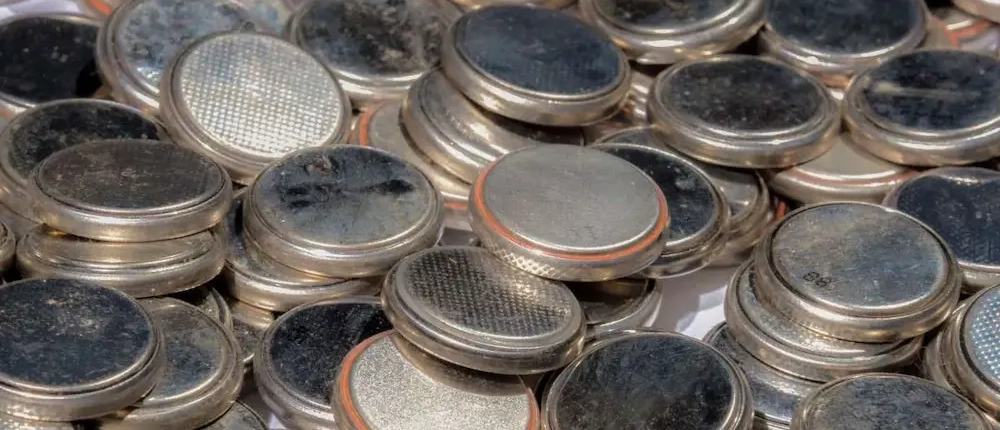
Did you know button batteries can kill

Button batteries and children

Button batteries are shiny, after all. Every week, a hospital in the UK admits one child under the age of five because they have swallowed a button battery or their parents suspect they may have done so.

Since most of our daily electronic devices have either screw-down battery compartments or are hidden behind slide-out panels, you may be wondering, “Where is the problem?”

One common scenario is that parents replace their batteries, forget to put them out of a child’s way, and leave them lying around on a table or worktop.

Alternately, the child might possess a cheap toy from a market that is not subject to child toy safety regulations and whose batteries easily come out.

Trading standards departments reportedly struggle hard to get these toys removed from market stalls and internet shops and destroyed. I recently bought a calculator from an online retailer, and the battery was easily accessible.
What happens if they are swallowed?

Button batteries rarely leak, but when they come into contact with human saliva or mucus, a chemical reaction begins, and a substance resembles “caustic soda”—a powerful alkaline that can burn through soft tissues within the body.

In our paediatric first aid courses, we often conduct an experiment where we use some inexpensive supermarket ham and a button battery. After about 30 minutes, the ham begins to turn grey or black, and we invite our learners to take a look.

Our learners are genuinely shocked to see the damage to the ham and how dangerous these tiny, shiny batteries can be if they come into contact with human saliva or mucus.

After a day, the battery had eaten the ham, showing how dangerous these batteries are.

All children have put objects in their mouths at some point; I can definitely recall my children doing it.

This poses a very serious risk to children.

button batteries can kill

Have they or haven’t they?

In the event your child has swallowed a button battery, they should go to A&E as soon as possible.

Even if the child has vomited out the battery, they still need to visit A&E immediately; the sooner they arrive, the sooner they can receive medical attention.

At first, the child may not exhibit any symptoms of swallowing a battery but later develop breathing problems or become ill.

If the child has swallowed a battery, they may start to cough up blood and need to go to A&E quickly.

What happens at A&E

While the child is under general anaesthesia, A&E will x-ray the child to determine the size and location of the battery.

They will then attempt to retrieve it using a small grabber and an endoscope, a long, thin tube with a light and camera on the end, to assess any tissue damage that may have resulted from the battery.

If the hospital determines that the child needs specialist treatment, it will then transport the child by ambulance to a children’s hospital that has the specialist skills.

Battery Out, Now what?

The child may require hospital treatment for a considerable amount of time if the button battery causes significant damage to tissues around the oesophagus (food pipe), vocal cords, or internal bleed.

The sooner the child arrives at A&E, the better their chances of surviving and recovering well.

Keeping children safe

Keep batteries out of reach and in blister packs because small children are curious and likely to put things in their mouths.

You should dispose of used batteries properly. Nowadays, many supermarkets and high-street retailers have recycling centres.

When possible, screw the battery compartments on children’s toys shut to prevent opening.

Learn first aid techniques, such as paediatric first aid, so you can help your child in an emergency situation until emergency services arrive.

To learn more about the damage button batteries can do and why you should seek medical help swiftly, here is a link from Great Ormond Street Children’s Hospital.

Children’s magnets too

Read my blog post to learn more about this new, perhaps fatal, craze that is spreading around the UK, which includes very powerful magnets that work like button batteries.

Conclusion

Avoiding the consequences of a child swallowing a button battery is far preferable to having to deal with it after the fact. If in doubt, get them to A&E right away or call the emergency services.

Store batteries out of the child’s reach, and make sure they cannot open toys that need batteries to function.

Dispose of old batteries as soon as possible by taking them to a recycling centre; kids like shiny things, and that is a fact, and when they get in their mouths, problems arise.

Enrol in a paediatric first aid course so that you can assist in the event of a medical emergency until the emergency services arrive to take over.

Our Blogs

We write regular blogs here at least once a month covering many subjects that might be of interest to you, so please check back often or catch up with them on social media.