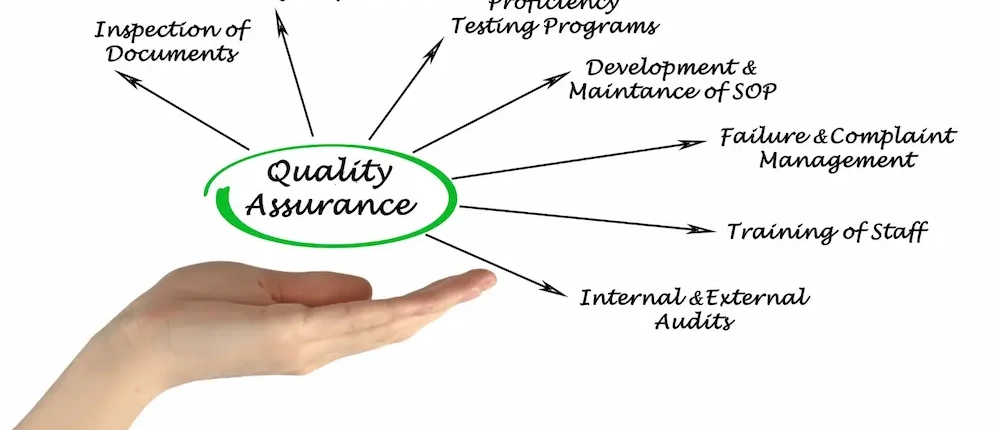
Quality Assurance Policy
Warwickshire First Aid Training is committed to providing fit-for-purpose qualifications through our Awarding Organisation, Qualifications Network (QNUK).
Our Commitments
Warwickshire First Aid Training Ltd is committed to ensuring that our learners have the right opportunities and support to achieve all they are capable of.
We will support learners by:
- Providing current and up-to-date information in relation to the qualifications that we offer
- Identifying the correct qualification for their needs.
- Offering points of referral for any needs that we are unable to meet.
- Providing a clear and transparent fee list
- Providing any pre-course information or guidance in good time
- Ensuring delivery staff, assessors and quality assurers are occupationally competent
- Ensuring learners are aware of the assessment requirements of the qualification
- Ensuring learners have fair access to assessment
- Make sure learners know the process when they haven’t demonstrated competence.
- Ensuring learners are aware of our appeals and complaints procedures
- Ensuring successful learners receive certificates promptly.
Promoting our regulated qualifications
If we identify a learner as undertaking a regulated qualification, we must ensure that we do not mislead them into taking an unregulated course.
We therefore consider the following when promoting our regulated qualifications:
- Titling
- Use of logos
- Access to qualification specifications
- Fees
- Logistical information
Titling
To ensure we do not mislead learners, we clearly identify all our regulated qualifications by their official titles.
The titles are structured as follows.
QNUK/LEVEL/TYPE/SUBJECT/(FRAMEWORK); an example is:
QNUK Level 2 Award in safeguarding and protecting Children and Young People (RQF)
We avoid using similar terms for unregulated courses.
Use of logos
Logos help learners identify any accreditations associated with the qualification.
Inappropriate or incorrect use can mislead our learners.
Some logos are prohibited, so we must ensure proper usage.
- Do not use regulator logos on any of our materials. Regulator logos include Ofqual, CCEA and Qualifications Wales.
- Do not use any other logos protected by Crown copyright, i.e., HSE
- Avoid using logos of memberships or associations that do not directly relate to your qualifications.
- Ensure the QNUK logo appears only on web pages or promotional materials promoting QNUK qualifications, or on generic pages such as “contact us” or “home.”
We ensure compliance with any guidance on the correct usage of logos.
Access to qualification specifications
Qualifications Network has created a qualification specification for each qualification.
We ensure learners have access to the qualifications by providing links to them on our website or, on request, emailing you a copy.
Fees
To ensure learners are not disadvantaged by additional or hidden fees, we have a transparent list of fees.
This fee list ensures learners are aware of any costs associated with undertaking qualifications provided by us.
Our fees list outlines costs associated with:
- Undertaking the qualification
- Cancellations
- Late payments
- Learner registration
- Assessments
- Certification
- Equipment, i.e., course manual
- Appeals
- Replacement certificates
Our fees list is available on request.
Logistical information
Some learners may have difficulty accessing courses in specific locations or at certain times or dates.
It would be unfair to accept a learner onto a course for them to find out they are unable to attend for the required duration.
We therefore ensure prospective learners are made aware of the logistical information before accepting bookings.
Logistical information is available on our website/on our course booking page/on request.
Booking confirmation and pre-course information
To ensure learners have sufficient preparation time, we will confirm their place and reconfirm the venue details, dates and times, and any other logistical information, e.g., parking.
Where required by the qualification, we will ensure learners receive copies of any course materials in a reasonable time.
Staff Competence
We are committed to ensuring our delivery, quality assurance, and office staff are competent and conversant in our products and services.
Our staff who deal with customer enquiries and bookings are often relied on by learners to ensure that the course of study they book onto is the one they require.
We therefore ensure staff are aware of the needs and benefits of each qualification.
They are also aware of where they can access additional information for uncommon questions and requests.
To continually provide learners with suitable information, we record customer queries.
This enables us to inform QNUK of any queries and to update our staff with correct, current information.
We ensure that those involved in the delivery, assessment, and quality assurance of qualifications are suitably qualified and experienced and meet at least the minimum requirements outlined in the QNUK delivery manuals for each qualification.
Our head of centre is responsible for ensuring that we retain copies of CVs, certificates, and activity logs for our delivery, assessment, and IQA staff. These are available on request to QNUK.
Staff Responsibilities
Below is an outline of our roles and responsibilities in relation to the delivery and assessment of QNUK qualifications.
The Centre Manager (CM) is usually responsible for:
- Planning and auditing course delivery and the quality assurance system
- Monitoring the Internal Quality Assurance (IQA) Strategy
- Ensuring compliance with QN requirements
- Recruitment of the course delivery and quality assurance team
- Writing and updating policies and procedures
- Liaising with external auditors and external quality assurers (EQA), including organising visits.
- Implement the AO/EQA recommendations.
The internal quality assurer is usually responsible for:
- Planning individual IQA activities
- Monitoring the assessment practice of assessors
- Verifying the accuracy, consistency and quality of assessors’ decisions
- Modifying practice and procedures as a result of evaluation
- Maintaining a record of their own professional development
- Reporting to the Lead IQA
The trainer/assessor is usually responsible for:
- Planning, managing and delivering courses
- Conducting formative and summative assessments
- Collating and preserving learner portfolios where relevant
- Agreeing on an individual learning plan with learners as appropriate
- Providing all the paperwork needed to maintain the IQA process
- Giving feedback on assessment practice
- Providing guidance and support to meet the assessment requirements of courses
- Maintaining a record of their own professional development
- Reporting to Line Managers and/or Centre Manager
Assessment
Assessment is a key area for quality assurance.
Failures or discrepancies in assessment indicate that a learner has been unsuccessful in achieving the qualification they set out to earn.
Which, in turn, prompts us to look for any failings in our systems.
QNUK has provided us with documents to support the undertaking of assessments.
For some qualifications, these documents include MCQ papers.
Others require more input from the assessor; for example, those qualifications that require a learner to build a portfolio of evidence.
Regardless of whether assessments are created by QNUK or within Warwickshire First Aid Training Ltd, we are responsible for ensuring that all assessments remain compliant with the principles of VCARS.
- Valid
- Current
- Authentic
- Reliable
- Sufficient
Where we have identified that assessments may not meet these principles, the head of centre will be responsible for reporting our concerns to Centres@QNUK.org.
Contributing factors to failures in assessment
There are several reasons a learner may not yet be competent.
It is our responsibility to ensure learners have sufficient opportunities to succeed, and therefore failures in assessment encourage us to consider:
- Was the qualification correct for the learner’s needs?
- Did the learner meet the prerequisite(s), i.e., language, abilities?
- Was the qualification delivered at an appropriate time/location?
- Were opportunities for reasonable adjustments missed?
- Was the teaching and learning appropriate to the learner’s needs?
- Was the learner aware of the assessment criterion?
- Was the learner suitably prepared for assessment (i.e., had enough recapping and practice time)?
- Did the learner know that an evaluation was taking place?
- Did the assessor assess the standardised criteria?
With this in mind, it is also our responsibility to ensure learners are successful, provided that each of the above is in place, rather than on factors that may lead to cases of malpractice.
Undertaking the assessment
Each qualification has different assessment requirements.
We will therefore ensure all assessment and quality assurance staff have suitable access to relevant QNUK qualification delivery manuals.
Access to fair assessment
How we ensure candidates have access to fair assessment is outlined in our Access to Fair Assessment policy.
This has been written to reflect the requirements of QNUK, outlined in their reasonable adjustments policy and qualification delivery manuals.
Quality assurance of assessment
To ensure assessments are fit for purpose, assessors and IQAs have a range of responsibilities:
The assessor should ensure the quality of the evaluation.
- Planning and facilitating formative assessment throughout the course using a range of methods
- Planning and facilitating summative assessment as per Qualification Network guidelines
- Ensuring all learner papers are marked correctly
- The confidentiality and safety of assessment papers and/or learner portfolios are maintained.
- Being familiar with and following the assessment requirements as outlined by Qualifications Network
- Cooperating with the Internal Quality Assurance Team and EQA visits
The Internal Quality Assessor (IQA) should ensure that the quality of assessment is assured by
- Verifying the suitability of lesson plans and assessment tools
- Sampling the work of trainers/assessors from each stage of the process
- Observing trainer/assessors’ performance
- Sampling candidate work
Risk ratings of assessors / IQAs
The quality of assessment and quality assurance can be affected by assessors and verifiers, whether due to inexperience or even complacency.
Because of this, we assess assessment and quality assurance staff on a risk basis.
The “traffic light” system records the level of risk, where green indicates low risk and red signifies high risk.
The centre manager will record the assessor’s level of risk in their personnel file.
Here are some examples of factors that contribute to each individual’s risk level.
High Risk (Red)
Newly appointed trainers/assessors/IQA staff
Not yet qualified trainers/assessors/IQA staff
Trainers/assessors/IQAs that have not updated their practice or have no record of CPD
Trainers/assessors/IQAs with frequent remedial actions identified via observation reports
Trainers/assessors/IQAs have made unsafe decisions
Newly appointed trainers/assessors/IQA staff
Not yet qualified trainers/assessors/IQA staff
Trainers/assessors/IQAs that have not updated their practice or have no record of CPD
Trainers/assessors/IQAs with frequent remedial actions identified via observation reports
Trainers/assessors/IQAs have made unsafe decisions.
Medium Risk (Amber)
Trainers/assessors/IQAs with a few remedial actions identified
Qualified and experienced assessors are new to the centre
Low Risk (Green)
Trainers/assessors/IQAs that demonstrate consistently up-to-date practice and have rare remedial actions identified on sampling.
Dealing with learners who are not yet competent
The integrity of a qualification and associated assessments should be called into question if there is a significantly high number of successful candidates.
At times, we must accept that some learners will not achieve the desired level of competence.
Where we have ensured learners are aware of the required standard, the learner should not be surprised if the assessment decision is that they are not yet competent.
Each assessor will provide feedback to learners who are not yet competent, highlighting any weaknesses.
We will ensure that we provide suitable and sufficient support to fill skills and knowledge gaps.
We will then arrange a reassessment.
Learners should already be aware of any reassessment fees.
Appeals and complaints
On occasion, candidates may not be satisfied with decisions regarding their assessments.
They are therefore able to appeal these decisions.
The process, including escalations, is outlined in our appeals policy.
Our appeals policy is available to candidates on request.
Processing of certificates
On successful completion of their qualification, learners have the right to receive their certificate.
We will ensure the swift registration of results onto the MyQNUK system.
We will also ensure that once received, certificates are signed and distributed as soon as possible.
When we receive requests for replacement certificates, we will confirm the candidate’s identity and register the requests with QNUK within 5 working days.
Quality assurance activities
To ensure the quality of our processes, the head of the centre ensures that the following quality assurance activities are undertaken.
- Website audit
- Marketing materials audit
- Customer service audit
- Fees list audit
- Staff records audit
- Policy audit
We conduct these audits annually or whenever a significant change occurs.
Results of audits are recorded and retained for at least 3 years.
In addition to auditing our quality process, we also undertake verification activities in relation to the assessment.
Planning IQA activities (visits)
The head of the centre is responsible for producing a sampling plan based on each trainer/assessor’s current risk rating.
The sampling plan would identify who requires an IQA assessment, what units need to be verified, and when.
Each IQA staff member should then produce an IQA Activity Plan for each activity they will undertake.
This plan outlines which units and outcomes we will verify, describes how we will conduct the assessment (methods), identifies any resources the IQA will need, notes any special needs highlighted by the assessor, explains how we will provide feedback, and details how we will record the outcomes.
This plan ensures transparency, consistency, and standardisation across the IQA team.
Verification visits can be unnerving for some individuals, and transparency can help to reassure trainers/assessors of what to expect on the day of the visit.
As such, this plan must be shared with them and the centre manager in advance; 48 hours’ minimum notice is standard.
The IQA may choose which assessment methods to use from the following:
- Observation of trainer/assessor performance
- Sampling of trainer/assessor work
- Sampling of learner work
- Witness statements (from learners/co-workers)
- Learner Evaluation
- Learner Interviews
- Verification of lesson plan validity and application
Sampling paperwork
The amount of paperwork that our IQAs have reviewed is comparable to the assessor’s current risk rating.
For example, a high-risk assessor will have all paperwork completed at the time of the visit and reviewed by the IQA to ensure that marking is correct and that documents are completed correctly and in accordance with centre policy.
For a medium-risk assessor, it is sufficient to review only half of the written papers (50% of the class), and for low-risk IQAs, they will sample a small percentage, such as 25% of the class.
Feedback is provided to the assessor by the IQA both verbally and in writing as soon as possible after the IQA visit.
The head of the centre also provides feedback to IQAs as soon as possible after receiving their reports.
To differentiate who has marked/reviewed questions, papers, assignments, reports, etc., we must have a system in place that provides a clear, consistent audit trail.
Our system is as follows:
- The assessor marks/verifies work in blue or black ink.
- IQAs verify work using red ink.
- Lead IQA should use a different colour to clearly show when/where they have reviewed IQA reports, or have some way of distinguishing themselves from the other IQAs
- EQAs verify using green ink.
Conducting IQA activity
We usually carry out our sampling activities by visiting the assessor while they assess.
However, on some occasions, we may conduct a remote visit, allowing the assessor to send data to the IQA.
Whichever method you choose, you will follow the steps and procedures outlined below.
Planning / preparation
Our IQAs will detail an assessment plan that specifies which assessments they will verify during the activity and the methods they will use to verify them.
I will share this plan with the assessor and the lead IQA.
When planning the visit, the IQA will ensure they have the correct contact details and site details and have planned their journey to arrive at the agreed time.
For some qualifications, reviewers may sample activities by examining the formal teaching session to verify whether the learning outcomes have been met, along with checking formative and summative tasks.
This is not a review of teaching practice or subject knowledge; it is simply verification that the outcomes are being covered.
If a learner had not received the proper training before the assessment, it would be difficult for them to meet the assessment criteria.
Lead IQA keep a record of this observation.
Arriving on site
Upon arrival, the IQA should inform the assessor, without causing unnecessary disturbance or interruption to any learning sessions.
When convenient, the IQA will review the assessment plan with the assessor, and both parties should initial their agreement on the plan.
The IQA may, at this point, ask to see the course register to verify that it has been completed correctly, and have ready the learner information they will need to complete their reports.
During the sampling activity, the IQA should position themselves suitably to monitor the training or assessment without disturbing the learners. They must also avoid locations that could cause unnecessary anxiety for a candidate during the assessment.
Collecting evidence
During the sampling activity, the IQA may observe the delivery of subject content and formative assessment and record how each learning outcome for the unit is covered using the ‘IQA’ observation form.
During the summative assessment, the IQA will observe learners demonstrating skills or completing test papers and will note how the assessments were conducted, including the outcomes.
We will reference observations and feedback against the assessment guidelines outlined in the QNUK qualification delivery manuals.
The IQA will scrutinise the submitted paperwork from the candidates and assessors, and they will initial it, preferably in red ink, to confirm their signatures.
The IQA will record the evidence collected on the ‘IQA Sampling Plan’ form.
Feedback and development points identified are recorded on the ‘IQA Report Form’.
IQA evidence collecting toolbox
In addition to the standard forms described above, our IQAs have a ‘toolbox’ of resources to substantiate the outcome of their reports.
For example, if our IQA cannot directly witness or provide evidence of a met outcome, they might interview a learner or ask additional questions of an assessor.
Completing this can be particularly useful if there are discrepancies in observed practice and feedback from the assessor or learners.
Learner evaluation forms
You can use learner evaluation forms after conducting a sampling activity following an assessment.
This may have been necessary due to IQA/assessor availability, delays in arrival, or a change to the expected course delivery/assessment schedule.
You can use them at other times, but they work best for these occasions.
Learner interviews
Use learner interviews to support observed practice by utilising the ‘Learner Interview Checklist.’ If you haven’t observed the assessment, conduct more extended interviews using the ‘Learner Interview Sheet.”
When conducting interviews, IQAs ensure the activity does not cause unnecessary disruption to the class or deter a learner from participating in course delivery.
Assessor question sheet
An assessor can use a question sheet to evaluate their own underpinning knowledge of the assessment criteria, including reasonable adjustments and marking schedules.
Completing the activity
Assessor feedback.
At the end of the sampling activity, the IQA will provide the assessor with an opportunity to reflect on their performance and to identify any development points or concerns.
The IQA should coordinate with the assessor to determine the best time and place for the feedback/review session. Whenever possible, they should complete this during the visit.
On rare occasions, the assessor may need to submit a written reflection. However, the IQA report and action plan must clearly detail this requirement.
Feedback should relate only to the learning outcomes and assessment criteria.
Reports
Upon completion of the verification activity, the IQA will submit their reports to the head of the centre as soon as possible.
“Send the IQA reports electronically.”
Should any urgent issues have been identified during the activity, the IQA will report to the head of the centre immediately.
Standardisation
Standardisation ensures the validity and reliability of the IQA process.
IQA team members are required to attend regular meetings to review best practices, raise ideas/concerns and receive updates on processes, policies, training, etc.
QNUK also organises standardisation events.
Attendance at these meetings and events contributes to individual Continuous Professional Development (CPD) portfolios.
CPD is integral to the quality assurance process, and IQAs maintain a record of their CPD activities.
A key component of a CPD record is reflective statements.