
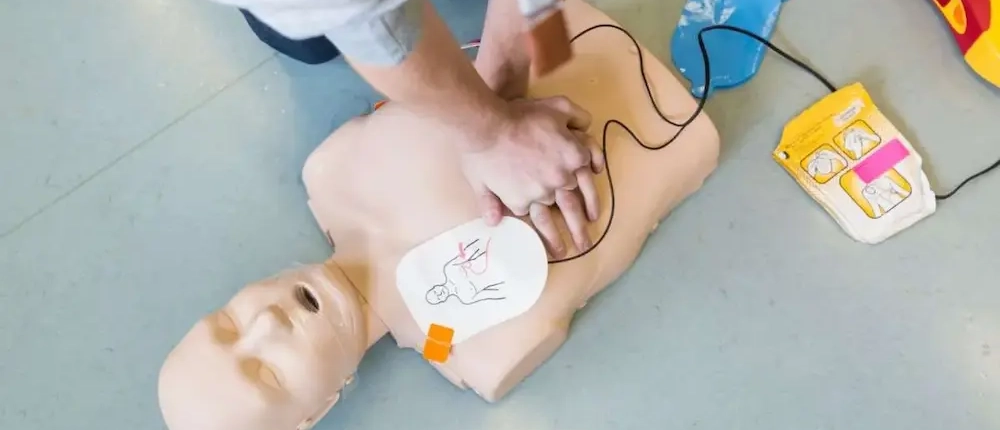
Do you know the difference between regulated and unregulated first aid training?
You’d be shocked at how many people don’t understand the difference between regulated and non-regulated qualifications.
Do you know the difference?
It happens regularly, and it comes up frequently in conversations we have with prospective business partners.
Some business owners don’t understand the difference between regulated and unregulated first aid training or what to do with an unregulated provider.
Understanding this distinction is crucial, as regulated qualifications are recognised and monitored by official bodies, ensuring a consistent standard of training and assessment.
In contrast, unregulated providers may not adhere to the same rigorous criteria, potentially compromising the quality of education and skills acquired.
This was all the outcome of a regulatory change in HSE (first aid) in October 2013.
Do you know how this change come about?
Until September 2013, first aid training providers had to register with the Health and Safety Executive (HSE) to offer HSE-approved first aid courses.
However, the market deregulated in October 2013, allowing for a broader range of first aid training courses from more providers. This change led to an increase in the availability and variety of first aid training options, catering to different needs and preferences. As a result, individuals and organisations could choose courses that best met their requirements, ensuring a more tailored approach to first aid education.
As a result, the first aid training sector can offer both regulated and unregulated courses.
Some providers opt to provide regulated certifications through Ofqual, while others opt to offer unregulated courses.
But are you aware of the differences?
Regulated First Aid Training
You’ll be surprised at how many regulated qualifications exist, and the number will continue to grow as new and enhanced qualifications become available.
However, an awarding organisation or multiple organisations develop all assessed learning programmes for regulated qualifications.
Awarding organisations must obtain regulatory approval for the qualifications they offer. This ensures that the qualifications meet specific standards and criteria set by regulatory bodies, providing assurance to learners and employers alike. As a result, individuals pursuing these qualifications can have confidence in the quality and recognition of their achievements in the job market.
Ofqual regulates England; Qualifications in Wales regulates Wales; and the Scottish Qualifications Authority regulates Scotland.
Multiple regulators oversee certain qualifications due to their availability in different parts of the UK.
Regulated first aid training providers must meet a set of standards established by the “Awarding Organisation,” which include:
- A recognised teaching qualification,
- A regulated first aid qualification that meets the requirement to teach the first aid courses for which they have applied
- Each trainer must have a minimum of 100 hours of training experience.
Throughout the year, they will undergo external and internal quality assurance to ensure that the trainer is meeting the criteria and requirements of the ‘awarding organisation’.
Unregulated First Aid Training
Typically, the training provider creates and designs their own unregulated first aid courses; these are known as study programs.
Third-party recognition for course development is optional, and the majority of suppliers do not offer it.
They also do not have any additional quality assurance checks during the course’s design, delivery, or the learners assessment processes.
How do you know its a regulated qualification certificate?
All regulated qualification certificates must have the regulator’s logo(s).
These are internationally recognised as a mark of excellence for regulated qualifications.
They must also include the awarding organisation’s logo and the qualification specification.
The certificate has a unique number from the awarding body that enables holder identification.
Qualification numbers are stored in the awarding organisation’s database, which is accessible via its website.
A certificate holder may only have one certificate in circulation at any time.
Replacements are only given if the awarding organisation is sure that its criteria are met.
Is regulated first aid training more expensive?
Pricing varies depending on many things and also on what the provider provides: “regulated or unregulated” first aid training.
It is true that providers of “regulated” first aid training must pay awarding organisations.
We would address this issue by enquiring, “How much do you truly value your time?”
If you have the time and expertise to perform your research, going unregulated may be a choice for you.
However, with a regulated qualification, the awarding body has already done the due diligence for you, and it meets all of the HSE (first aid) due diligence criteria for first aid training.
Any employer will accept an OFQUAL-regulated first aid qualification, which the learner may take with them.
An unregulated first aid course may not be applicable in all workplaces, which is why we frequently ask if you understand the difference between the two types of first aid training.
Our thoughts
Ultimately, it is up to the business owner or employer to determine whether an unregulated or regulated qualification meets their needs and standards.
If they choose an ‘unregulated’ course, the business owner or employer is responsible for conducting their own due diligence to verify it fulfils their needs and regulations.
9 times out of 10 we ask the question, ‘Do you know the difference between regulated and unregulated?’ Once they understand that, then they go with the regulated qualification.
But we always ask the question, ‘Do you know the difference?’ and then we go from there.
What do we offer
From the outset, we at Warwickshire First Aid Training decided to regulate all of our first aid training qualifications.
We welcome both internal and external quality assurance audits because they help us improve our training and delivery to our customers.
We aspire to provide the highest-quality available training that is “up-to-date, precise, and fit for purpose” for all of our customers.
Emergency First Aid at Work and First Aid at Work, which we deliver on their premises, are our most popular first aid qualifications among our customers.
We also provide first aid training for schools, including emergency paediatric first aid and paediatric first aid.
Specialised short first aid training courses include Responding to Incidents with an AED, Responding to Anaphylactic Reactions, and Basic Life Support (Adult and Child).
We also have a centre in Rugby, where we run workplace first aid courses for individuals and small groups that want to come to us.
We frequently face comparisons with unregulated training providers, and it’s true that they sometimes offer lower prices than we do. But we always ask that question. Do you know the difference between unregulated and regulated?
Conclusion
Choose a first aid qualification that is widely recognised, regulated, and validated, adhering to a traceable learning pathway.
A record of the person’s accomplishments will be available in the awarding organisation’s database for verification and validation.
All accredited first aid courses are frequently IQAd and EQAd for compliance, whereas unregulated first aid courses are not required to do so.
We frequently ask our partners, “Do you know the difference between regulated and uncontrolled first aid training?”
The choice is clearly up to the employer or business owner, but you now understand the difference between regulated and unregulated first aid qualifications.
So if we asked you, “Do you know the difference?” you’d know, right?
Insurance companies prefer regulated qualifications and give better quotes for insurance because they know that the first aid training meets very high standards.
We have often wondered whether they have asked the company. Do you know the difference? I can imagine they probably have.
Our Blogs
We post regular blogs here at least once a month about a variety of topics that may be of interest to you, so please check back frequently or follow them on social media.